
By Gemma Fraser
Head of content
Staff shortages, high workloads and an ageing estate in Police Scotland’s custody division are impacting officer safety and prisoner welfare, a new report has revealed.
A ‘deep dive’ into the provision offered by the nation’s main custody centres has highlighted “significant systemic pressures” affecting operational policing, officer wellbeing and service delivery.
The review was carried out by the Scottish Police Federation (SPF) following “sustained concerns” raised by its members.
It highlighted five key issues, including persistent staffing shortages, with centres routinely running below the operational baseline levels.
More than 70 per cent of custody respondents said the centres they work in frequently or always operate below minimum staffing levels, with shortages a result of sickness absence, vacancies and officers being pulled away to take on other duties.
They also said there is a reliance on overtime, as well as staff being moved between custody centres.
Scotland’s police stations have lost almost 40 per cent of their cells since the creation of the single force.
1919 also recently highlighted issues in Argyll and West Dunbartonshire with officers spending a chunk of their shift travelling hundreds of miles to cover jobs or to transport detainees to custody centres.
The deep dive revealed similar problems around custody centre closures and reduced capacity, particularly in Fife, Ayrshire, and parts of northern Scotland.
This has resulted in significantly increased transport times for prisoners, with these extended journeys said to reduce operational policing capacity while creating additional risks associated with prolonged prisoner transport.
Almost two thirds of custody staff reported that they rarely or never receive adequate breaks during their shift, the report said.
“These findings raise concerns regarding fatigue, wellbeing and organisational resilience,” it stated.
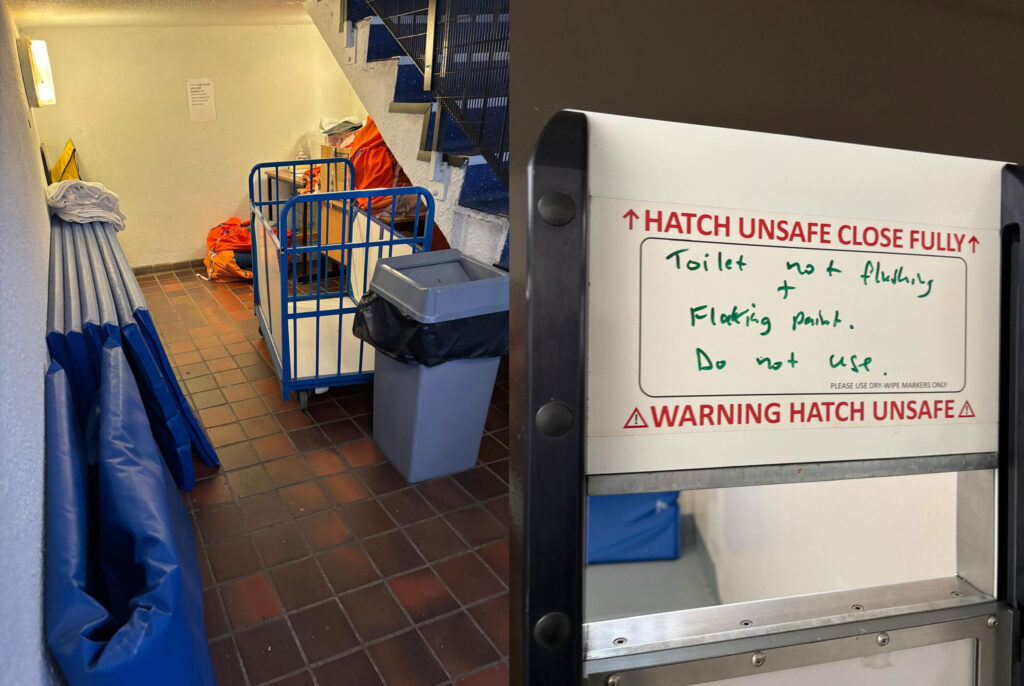
The ageing custody estate is also problematic, according to the report, with the SPF highlighting health and safety concerns at several locations, including “deteriorating infrastructure, inadequate welfare facilities, poor environmental conditions, maintenance deficiencies and specific fire safety concerns”.
A number of “organisational risks” were identified, including a greater likelihood of assaults associated with prolonged processing times and extended prisoner transport, and increased financial pressures arising from overtime, abstractions and inefficient deployment of resources.
Gordon Forsyth, the SPF’s health and safety assistant to the general secretary, said: “Custody division remains one of the most critical functions within Police Scotland’s criminal justice system.
“The Federation’s review concludes that the commitment and professionalism of custody personnel continue to sustain service delivery, despite considerable operational pressure.
“The evidence suggests that the principal challenges are systemic rather than individual.
“Addressing workforce resilience, estate condition, operational capacity and staff welfare will improve public safety, strengthen frontline policing and ensure custody services remain safe, effective and fit for the future.”
The SPF made 17 recommendations, including carrying out fresh reviews into custody division staffing levels, prisoner process procedures, and custody centre closures.
Meanwhile, a joint review of police custody recommendations was published in August by HM Inspectorate of Constabulary in Scotland and Healthcare Improvement Scotland.
It called for Police Scotland to act “at pace” to improve police custody services across the country.
It identified a number of “ongoing challenges” relating to the custody operating model, the ageing custody estate, staffing and workforce planning, and operational practices associated with the supervision of vulnerable detainees, including children and those assessed as high risk.
Rob Hay, president of the Association of Scottish Police Superintendents, also raised concerns in a letter to The Herald about the drop in arrests brought to custody, despite a 10 per cent rise in crime.
His letter was in response to Chief Constable Jo Farrell’s annual report to the Scottish Police Authority in which she revealed there had been 15,451 fewer arrests where the accused had been taken to a custody centre in 2025/26.
Chief Superintendent Christopher Stewart, Criminal Justice Services Division, said: “I am grateful for the dedication, professionalism and commitment shown every day by officers and staff working within custody centres across Scotland.
“Despite the challenging and dynamic nature of police custody, they continue to deliver high-quality care and ensure a safe and secure environment.
“We’re working to improve police custody so that it supports effective operational policing, provides appropriate accommodation for those in our custody, and has the right staffing in the right places across Scotland.
“We also recognise the importance of maintaining a custody estate that supports both effective operational policing and the wellbeing of our workforce.
“Improving a large custody estate will require time and investment, and we’ll bring forward plans as progress is made.
“We will continue to engage with the Scottish Police Federation, staff associations and our workforce as this work progresses.”
