
By Adam Morris
Some retired police officers in Scotland entangled in the national pensions crisis have been asked to pay money back to the government, it has been confirmed.
The development confirms the worst fears of campaigners, who warned of the possibility after learning some colleagues in England – who are further ahead in the process – had been sent similar demands.
Now 1919 has spoken to three retired officers who have received repayment requests from the Scottish Public Pensions Agency (SPPA).
The complex row relates to a Supreme Court pensions ruling, which found the automatic switching from one scheme to another for public service workers was unlawful on age discrimination grounds.
The so-called McCloud Remedy affects police officers who retired between 2015 and 2022. It had previously been assumed that all those affected would receive an increased payment, with some expecting figures in the tens of thousands.
But complexities relating to ill health retirements and injury on duty awards have resulted in some updated settlement statements showing that far from receiving too little, some retired officers were actually overpaid.
The trio affected agreed to be interviewed by 1919 on the condition of anonymity.
One retired senior officer was forced to leave policing after enduring years of stress and anxiety in a variety of roles, and has been diagnosed with post-traumatic stress disorder (PTSD).
However, after a recalculation by the SPPA, they have been asked to pay back around £1,000.
“I’m unable to work,” they said. “My pension is all I’ve got and it’s spoken for every month. I’ve had to apply for disability benefits, and as someone who’s proudly worked since they were 16 that’s something I didn’t want to do.
“As I listen to my friends and former colleagues moving on with their new lives, in new careers, going on holidays, I feel I’ve lost out on a lot while I’m stuck trying to recover.
“I’m in this situation because of my career in the police. I loved the job but it took it out of me – you sacrifice so much including your safety, your time with family.
“This situation of asking for money back is morally and ethically wrong. It was their mistake, not ours. After a career giving everything to policing, many of us have been left on the scrapheap.”
Another, who was severely injured on duty, has been asked to make a considerably higher repayment.
They said: “When you start with the police you make plans for retirement.
“But the plans I had were taken away. You think you’ll be in a job for 30 years, then get a pension, and plan for that.
“I didn’t ask or expect to be injured, and now I feel I’m being penalised for that.”
A third officer who spoke to 1919 was more sympathetic towards the plight facing the SPPA.
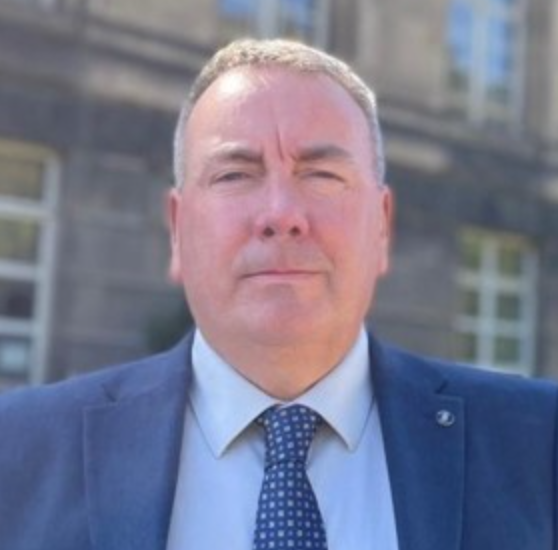
Retired officer
They retired around five years ago after being seriously injured on duty during a road collision, and have been asked to repay a four-figure sum.
“You’d need rocket scientists to get to the bottom of all the various claims,” they said. “It’s so complicated.
“It’s difficult even to understand your own figures because there are so many factions of it all. The crux of it all is when people are split between the two schemes.”
The SPPA is facing mounting criticism because of the time it has taken to provide retired public servants with their settlement statements.
Deadlines have frequently moved, and chief executive Stephen Pathirana recently admitted to a Scottish Parliament committee that it could be 2027 before cases are resolved.
The impact on the Scottish Government quango has been significant.
Its workload has increased five-fold, and the scale of the challenge has now expanded to other public servants like health workers, teachers and local authority staff.
It has been estimated that the overall cost to the public purse of resolving the matter could reach £1.7 billion.
David Kennedy, general secretary of the Scottish Police Federation (SPF), said: “We are speaking to ministers and the SPPA and trying to secure the best possible outcome for those affected by this.”
The SPPA was approached for comment.