By Gemma Fraser
Head of content
In the winter of 1898, a little girl named Minnie Smith became the first child to benefit from philanthropy that would go on to help thousands of police officers’ children over the next century and beyond.
Minnie was one of more than 600 children who spent all or part of their childhood at the Northern Police Orphanage in Harrogate after losing one or both of their parents, with their care funded by thousands of serving police officers through weekly donations.

The orphanage itself closed in the 1950s, but its legacy lives on through The Police Children’s Charity, which supports police families across the UK by helping to ease the financial pressures of bringing up children in the face of life-changing circumstances.
In Scotland, there are currently 137 beneficiaries of the charity, who are being helped through a variety of grants, ranging from weekly financial support to funding for counselling sessions, the purchase of specialist equipment for disabled children, and driving lessons.
The charity also offers a free stay at its holiday home in the same picturesque Yorkshire town where it has its roots, which is available to all families currently receiving financial assistance.
To benefit from such support if it is ever needed, police officers and staff are invited to become ‘donors’ to the charity.
From the point of signing up, their children will then be eligible for grants if the worst should happen – including the death of the police donor parent or their partner, or where the police donor takes early medical retirement.
“If you sign up as a new officer, the first 12 months are free, but you can access provision and help within that time,” explains Patrick Cairns, the charity’s chief executive.
“The beneficiary is the child. The aim is to get the child into the pot so we can look after them. Policing is inherently dangerous and challenging – physically and mentally. Injuries happen.
“We cover those who have died and those who have taken early medical retirement, as well as serving officers who are trying to access counselling support and wellbeing grants for their children.
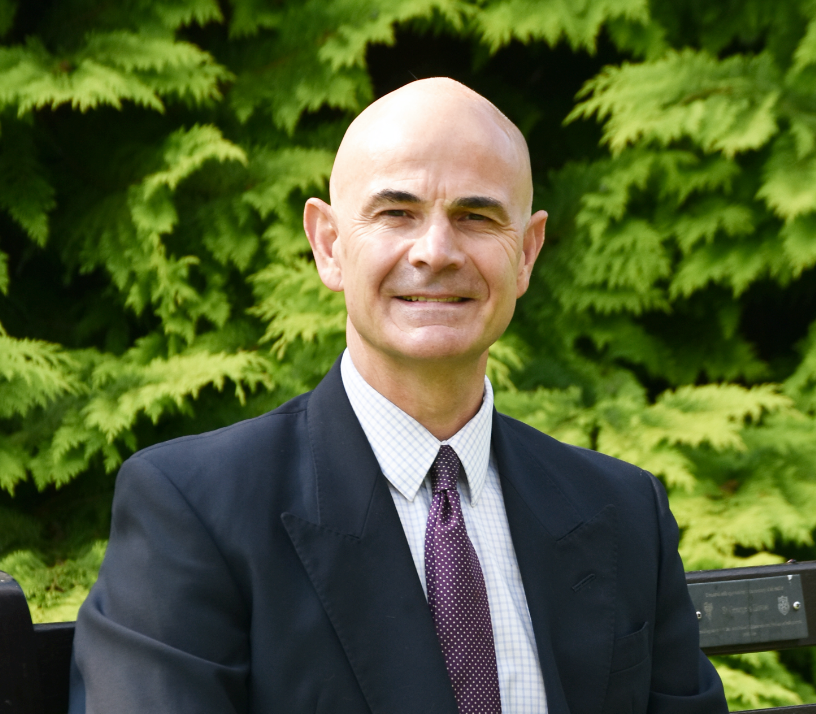

“We cover deaths or retirements, whether it’s on or off duty. We don’t distinguish between those.
“I think sometimes people think it’s got to be an on-duty death. Obviously we have some beneficiaries who fall into that category, but there’s many more who have had bad luck or a life illness.”
The charity spent well over £700,000 supporting beneficiaries across the UK last year. The costs involved in becoming a donor are minimal – but Cairns says there has been a drop-off in the number of officers signing up in recent years.
Police Scotland is the charity’s biggest donor force, sitting at just under 9,000, but the number dropped last year by 400.
Across the UK, the number has fallen by 35 per cent, from 42,000 in 2011 to 27,000 today.
“Sadly, the officers and police staff don’t sign up to the charity in the numbers they once did,” Cairns tells 1919. “It costs 35 pence a week, £1.50 a month, £18 a year.
“I can’t believe there’s a financial reason for the drop-off when it’s 35 pence a week. I think generationally and culturally, you’ve got a different group of men and women joining the police.
“In days gone by, in the beginning of their careers, everyone would sign up for everything, but these days they’re a little bit more reflective and want to know what things are.
“Many young people join the police now and they’re not necessarily thinking of doing a whole career. They might be single or have no kids, they might think they’re only going to do five years, they might think they’re never going to get married, they’re never going to have children.
“And most importantly they think it’s never going to happen to them.
“So, it’s one of those things that they just kick into the long grass and park, thinking they don’t have to worry about it.”
For the Wilkie family, being charity donors meant they had somewhere to turn when they needed help purchasing specialist equipment during Covid.
Police officer Alan Wilkie, based in Tayside, made an application for a grant to help his eldest daughter Maisie, who suffered a catastrophic brain injury during birth and has cerebral palsy.
Maisie is registered as severely visually impaired, hearing impaired, suffers from seizures, is fed via a feeding pump and has developing scoliosis.
“If the unimaginable happens, we offer an unparalleled range of support”
All of this means she requires round-the-clock care from Alan and his wife Claire.
“Daily life with Maisie means that Claire and I are full-time carers. We give medicines, carry out personal care and do physiotherapy with Maisie throughout the day,” says Alan.
During the Covid lockdowns, Maisie could not access the hydrotherapy and rebound therapy which helped prevent her condition worsening, so the couple made an application to The Police Children’s Charity to seek financial assistance for adjustments to allow her to access the back garden to play and have the therapies at home.
The money from the charity allowed the family to upgrade the garden to allow wheelchair access for Maisie, as well as creating a sensory garden for her.
“Claire and I are both very grateful for the support provided by The Police Children’s Charity in making this possible,” adds Alan.

For former Police Scotland officers Fiona and Michael Stevens, a grant from the charity allowed them to purchase a garden cabin with heating and power to provide a safe and calm environment to help their twin boys Ben and Finlay, who have severe autism, a learning disability, hypotonia, hypermobility and dyspraxia.
Mike, who retired from the force 10 years ago, tells 1919 that he and Fiona would “always be grateful for the charitable support we received during our time as serving officers”.
There are 320 full-time beneficiaries across the UK, and a further 40 young people accessing the serving officers’ grants for things including wellbeing adjustments or counselling.
Cairns says: “If the unimaginable happens, we offer an unparalleled range of support.
“I’d say to everyone, you just never know what’s around the corner, it is one of those things that you hope you’re never going to have to claim.
“If you don’t, then you know you’re supporting the children and young people of colleagues when something dreadful has happened within their lives for what is a negligible sum of money that you will never miss at all.
“When in doubt, donate. You never know when you might need it.”

