
By Jane Hamilton
Contributor
Three minutes. That was all it took for Suzanne Pilley to disappear.
On the morning of Tuesday, 4 May 2010, the 38-year-old bookkeeper left the Sainsbury’s store in Edinburgh’s St Andrew Square carrying a small bag of shopping, turned into North St David Street, and headed towards her office in nearby Thistle Street.
CCTV cameras captured her walking with purpose, just as they had recorded thousands of other commuters making the same journey that morning.
Three minutes later, the trail ended. Suzanne was less than a minute’s walk from work.
Nobody saw what happened next. But she vanished completely.
Sixteen years on, nobody can say with absolute certainty where she died, how she died, or where her body lies.
Yet one man is serving a life sentence for her murder, and one of the biggest criminal investigations in modern Scottish history remains unfinished because, despite years of searching, Suzanne has never been found.
Murder investigations are supposed to begin with a body. Detectives identify the victim, establish how they died, preserve the scene and slowly work backwards until they reach the killer.
In Suzanne Pilley’s case, police were forced to do almost everything in reverse. Before they could prove who had murdered her, they first had to convince themselves – and eventually a jury – that she had been murdered at all.
In the days immediately after she disappeared, there was still hope that Suzanne would walk through her front door.
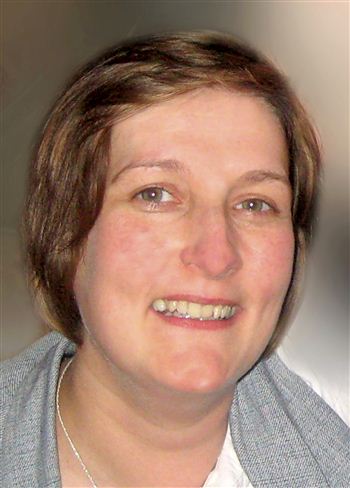
She wasn’t the sort of person who simply vanished. Friends and family described her as dependable, close to her parents, and fiercely independent. She lived alone with her cat, enjoyed socialising, and rarely failed to keep in touch.
When she didn’t arrive at work that Tuesday morning, colleagues assumed she had been delayed. By the afternoon, concern had turned to alarm.
Her parents, Robert and Sylvia, reported her missing, unable to understand why their daughter had disappeared without making contact.
The appeal that followed quickly became one of the biggest Scotland has seen.
A week after Suzanne vanished, police erected huge video screens in Edinburgh city centre, repeatedly showing the final CCTV images of her walking towards work.
Detectives hoped that someone, somewhere, might remember passing the smiling woman in the light blue jacket during those missing few minutes between the camera and the office.
Thousands of people watched the footage. The images were carried on television news, splashed across newspaper front pages, and shared across the internet. Every fresh appeal generated new calls, new theories and new hope.
None of them led to Suzanne.
Behind the scenes, officers were painstakingly reconstructing the final hours of her life.
They traced bus routes, studied CCTV from shops and businesses across the city centre, and interviewed anyone who might have crossed her path that morning.
It was an investigation measured not in dramatic breakthroughs but in tiny fragments of information, each one painstakingly fitted into place.
Gradually, detectives became convinced they were not looking for a missing woman who had chosen to disappear: this was something far more sinister.
Two weeks after Suzanne vanished, police made the announcement everyone had feared.
The inquiry was no longer being treated as a missing person investigation, but as a murder inquiry.
It was a remarkable decision given there was still no body, no murder scene and no forensic evidence proving Suzanne had been killed.
The search was widened far beyond Edinburgh, into some of Scotland’s most remote countryside.
Roads through Argyll, stretching from Tyndrum towards Inveraray and the vast forests surrounding the Rest and Be Thankful, suddenly became the focus of intense police activity.
“It was a remarkable decision given there was still no body, no murder scene, and no forensic evidence proving Suzanne had been killed”
Residents watched as search teams combed woodland and officers appealed for information about the movements of a silver car seen travelling through the area the day after Suzanne disappeared.
The search area covered hundreds of square miles, prompting inevitable speculation that detectives believed her body had been taken far from the capital.
The question everyone was asking was painfully simple: who would want to kill Suzanne Pilley? The answer, detectives believed, lay much closer to home than anyone had first imagined.
Suzanne had been having an affair with a work colleague, David Gilroy, the company’s facilities manager.
It had been a secret relationship, complicated from the beginning because Gilroy was married with children.
But by the spring of 2010 the affair was over, and prosecutors would later argue that Gilroy had never accepted the relationship had ended.
Friends told police Suzanne had become increasingly uncomfortable with his behaviour. She believed he had somehow gained access to her email account and was becoming controlling.
Mobile phone records revealed just how persistent he had been. Sometimes he sent dozens of text messages in a single day.
On 3 May, the day before Suzanne disappeared, he contacted her repeatedly, leaving 15 text messages and a voicemail.
Then, quite suddenly, the messages stopped. For detectives, that silence would become as significant as the messages themselves.
When officers arrested Gilroy in June 2010, barely seven weeks after Suzanne had vanished, many were stunned.
Police had charged him with murder despite still having no body and no obvious crime scene.
It was a bold move, and one that carried enormous risks. If prosecutors failed to persuade a jury, there was every chance that Suzanne’s disappearance would remain one of Scotland’s greatest unsolved mysteries.
Instead, what followed would become a masterclass in painstaking detective work, as investigators slowly pieced together dozens of seemingly insignificant clues until they formed a picture the Crown believed pointed to only one conclusion.
The difficulty facing detectives was obvious. Suspicion, however strong, was never going to be enough. They needed evidence, and almost every avenue they explored seemed to present as many questions as answers.
The first breakthrough came inside the offices in Thistle Street where Suzanne and David Gilroy had worked together.
Specialist cadaver dogs from South Yorkshire Police were brought in to search the building.
These were not ordinary police dogs. Trained to detect the scent of blood and human remains long after they had been removed, they methodically searched the premises before indicating three areas of interest – one in the basement of the office building and two in the boot of Gilroy’s silver Vauxhall Vectra.
It sounded like a significant development, but detectives knew better than to celebrate.
A dog’s indication is intelligence, not proof. Every alert had to be backed up by science.
Forensics teams spent days examining the office and Gilroy’s car, searching for the tiniest trace of Suzanne.
Modern juries have grown accustomed to DNA solving crimes almost instantly, but real investigations are rarely so accommodating.
There was no blood, no fingerprints, no strand of hair or fragment of tissue that could place Suzanne in the boot of the car or prove she had been attacked inside the building.
Even the forensic scientist who examined the vehicle could only tell the court she noticed what appeared to be the fresh smell of either an air freshener or a cleaning product when she opened the boot. It was suggestive, but it wasn’t proof.
If the lack of forensic evidence frustrated detectives, Gilroy’s behaviour increasingly intrigued them.
They discovered that his apparent obsession with Suzanne had not ended when their relationship did. Mobile phone records painted a picture of a man who had struggled to let go.
But once she vanished, there was no contact. It was, prosecutors would later argue, completely at odds with the behaviour of a man desperately trying to reach a missing former partner.
Detectives were equally interested in Gilroy himself.
When he was interviewed shortly after Suzanne disappeared, officers noticed scratches across his hands and arms, a cut hidden beneath his hairline, and bruising to his chest.
By the time photographs were taken, some of the marks appeared to have been covered with cosmetic cream.
A forensic pathologist later told jurors that the injuries were consistent with scratches caused by another person’s fingernails during a struggle, and similar to injuries he had seen in strangulation cases, although under cross-examination he accepted they could also have been caused by something as innocent as gardening.
Like so much else in the case, it was another piece of evidence that was open to more than one interpretation.
Then there was the journey.
On the day after Suzanne disappeared, while her family and colleagues were desperately hoping she would be found alive, Gilroy climbed into his silver Vauxhall and drove west.
Using CCTV cameras, fuel receipts and painstaking reconstruction, detectives traced much of the route towards Lochgilphead. But something didn’t add up.
When officers drove the same journey themselves, they discovered Gilroy had taken around two hours longer than expected in each direction.
Fuel analysis suggested another 124 miles had been travelled but could not be accounted for. Somewhere within those missing miles, prosecutors believed, lay the answer to the baffling disappearance.
The forests of Argyll suddenly became the focus of one of the largest search operations in recent Scottish policing.
Teams of officers, search specialists and volunteers combed steep hillsides, forestry tracks and dense woodland around the Rest and Be Thankful, Hell’s Glen and Lochgilphead.
Helicopters flew overhead while the searchers pushed through thick undergrowth in the hope of finding the one piece of evidence that would answer every remaining question.
They never did. Suzanne’s body was not there. Or, if it was, it remained hidden.
By the time David Gilroy stood trial at the High Court in Edinburgh in February 2012, the Crown faced an extraordinary challenge.
There was no body to present to the jury. No murder weapon. No confession. No eyewitness.
The prosecution case rested almost entirely on circumstances which, viewed individually, might appear unremarkable but, prosecutors argued, became overwhelming when placed together.
Advocate Depute Alex Prentice invited jurors to stand back and look at the whole picture.
“The defence saw it very differently. Without a body, they argued, nobody could prove Suzanne had been murdered at all”
Suzanne, he said, had simply stopped living. She had not used her bank accounts, contacted family or friends, arranged for anyone to care for her beloved cat, or given the slightest indication she intended to disappear voluntarily.
Gilroy, meanwhile, had embarked on what the Crown described as a journey of “no importance” into remote Argyll while the search for Suzanne gathered pace.
His relentless messages ceased the moment she vanished. The Crown argued there was only one logical explanation. Gilroy already knew Suzanne could not reply because she was dead.
The defence saw it very differently. Without a body, they argued, nobody could prove Suzanne had been murdered at all.
Every strand of the Crown case was circumstantial. The dogs had found nothing conclusive. The forensic scientists had found no DNA. The scratches on Gilroy’s hands had innocent explanations. Suspicion, however powerful, could never replace proof beyond reasonable doubt.
For two and a half days, 15 jurors wrestled with those competing arguments behind closed doors, fully aware they were about to decide one of the most unusual murder trials Scotland had ever seen.
When they finally returned to Court 11 on 15 March 2012, the jury had reached its decision.
By a majority verdict, David Gilroy was found guilty of murdering Suzanne Pilley and attempting to defeat the ends of justice.
The verdict was remarkable, but it was not without precedent. Scottish juries are entitled to convict on circumstantial evidence, provided the separate strands come together strongly enough to leave no reasonable explanation other than guilt.
In Gilroy’s case, the Crown had asked jurors to look beyond the absence of blood, a weapon or a body and instead consider the abrupt ending of Suzanne’s life, his obsessive contact with her before she vanished, the injuries noticed on his body, the cadaver dogs, the freshly scented car boot and the unexplained miles in Argyll.
The jury accepted that picture.
Just over a month later, Lord Bracadale sentenced Gilroy to life imprisonment and ordered him to serve at least 18 years before he could apply for parole.
The sentencing itself became part of legal history when cameras were allowed into court for footage to be broadcast later that day, a first for the sentencing of a convicted person in the UK.
Gilroy remained out of shot. The camera focused instead on the judge as he addressed the man convicted of taking Suzanne’s life and hiding her body.
The conviction brought a measure of justice, but it did not give Suzanne’s parents what they wanted most.
Robert and Sylvia Pilley could not arrange a funeral. They could not choose a grave, or place flowers beside their daughter’s name.
They were left knowing that somewhere, perhaps in a remote patch of Argyll woodland passed every day by walkers and motorists, Suzanne remained hidden.
Gilroy has continued to deny killing her. His appeal against conviction was rejected, as were later attempts to have the case reconsidered.
In 2017, the Scottish Criminal Cases Review Commission closed its review. None of those legal challenges produced new information about Suzanne’s whereabouts.
Police searches have returned again and again to the rugged landscape around Argyll, where steep slopes, thick forestry and countless tracks give way to miles of lonely ground.
It is beautiful country, but it is also unforgiving. A body concealed there could remain undiscovered for years, particularly if the person responsible had time to choose a place far from the road.
“A killer should not be able to deny a family the basic dignity of burying their loved one, then expect that refusal to carry no consequences when asking for freedom”
The route Gilroy took on 5 May 2010 has been examined, retraced and debated repeatedly. The missing mileage remains one of the most haunting elements of the case because it suggests a journey within a journey, a diversion known only to him.
Detectives may have narrowed the possibilities, but Argyll is vast, and without a precise location every search becomes an attempt to find one disturbed patch of earth among thousands.
For Suzanne’s family, it has meant living with an additional cruelty faced by relatives in so-called ‘no body’ murders. They know who the law says killed their daughter, but not where he left her. They cannot recover her remains unless he decides to speak or someone else comes forward with information.
The injustice prompted years of pressure for changes to the way parole authorities deal with killers who refuse to reveal where they have hidden their victims.
This year, new rules were introduced allowing that refusal to be considered when release is discussed, followed by legislation widely referred to as Suzanne’s Law, making the withholding of information about a victim’s remains a formal factor in parole decisions.
It cannot force a murderer to disclose a burial place, but it makes clear that continued silence is not irrelevant. A killer should not be able to deny a family the basic dignity of burying their loved one, then expect that refusal to carry no consequences when asking for freedom.
Yet laws cannot locate a body.
In 2024, Crimewatch issued another appeal for information about where Suzanne might be.
Fourteen years had passed since she disappeared, but detectives still hoped someone might remember a silver car on a forestry road, an unusual disturbance in the ground, or a conversation that seemed meaningless at the time.
Perhaps the answer lies in one of those overlooked details. Perhaps it rests entirely with David Gilroy.
What remains certain is that Suzanne did not simply vanish. She had a family who loved her, friends who expected to see her again, and a life she had made no preparations to leave.
Her killer stole all of that in a matter of minutes, then hid the one thing that might have allowed those closest to her to say a proper goodbye.
Sixteen years after she walked towards her office on an ordinary Tuesday morning, the final part of Suzanne Pilley’s story has still not been written.
Her family are still waiting to bring her home.